Painting depicting the construction of the Tower of Babel

Multilingual support in LLMs is not a nice-to-have

I remember back in November 2022, when ChatGPT was released and everyone was going crazy about how smart and humanlike it was. I sat down and started talking to it in Czech. After reading so many raving reviews and hyperbolic predictions, I was shocked by how quickly I ran into the model’s limits in Czech. Now don’t get me wrong: I know my native tongue is not a top-tier language, given it only has about 10 million native speakers. I don’t expect AI models to be as proficient in Czech as in English or other major languages. But it still made me think: if I am getting a much worse experience from large language models than English speakers are, what is the experience like for people who speak languages with even less digital support? ...

March 30, 2026 · 6 min · 1174 words · Tom Burkert
A retro robot with a sad, confused expression holds power tools in a kitchen while a person shows it a book titled Human Tasks for Dummies.

How many AI PhDs does it take to change a hinge?

It started with a broken hinge in our kitchen cabinet. I am no handyman, but I like to do as much as I can around the house and I dare say I’ve gotten pretty okay at it. The one thing that can set me back, though, is not knowing the correct terminology. What type of hinge do I need? Concealed? Inset? Overlay? Clip-On? Soft-close? Sprung? An avalanche of terms that I only barely understand paralyzes me. Luckily, there’s a new helper in town: AI! ...

December 8, 2025 · 5 min · 890 words · Tom Burkert
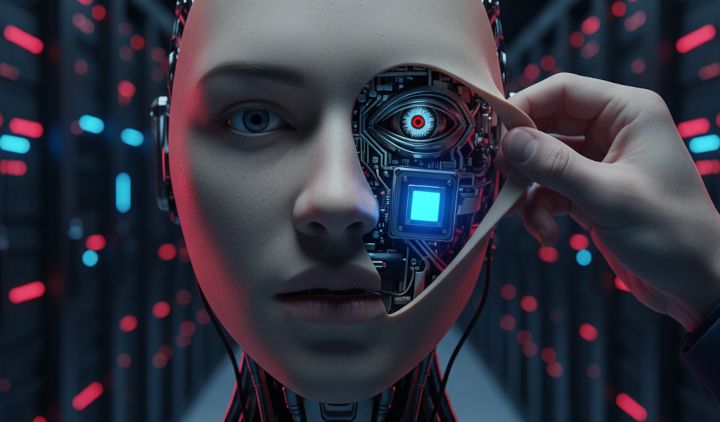
Image of an humanlike android whose mask is being taken care of to reveal the robotic nature

The Case Against Anthropomorphic AI

Our old friend Pygmalion Humans have always anthropomorphized1 non-human entities, from ancient gods and natural forces to modern cars and ships. But our tendency to see machines as human-like has dramatically intensified with the advent of conversational AI. This isn’t entirely new - the word “robot,” coined and popularized by Čapek brothers in 1920, originally described artificial beings indistinguishable from humans. Our drive to find and create humanness in artificial entities runs deep, even back to the ancient times with myths like Pygmalion and Galatea. ...

September 7, 2025 · 21 min · 4307 words · Tom Burkert